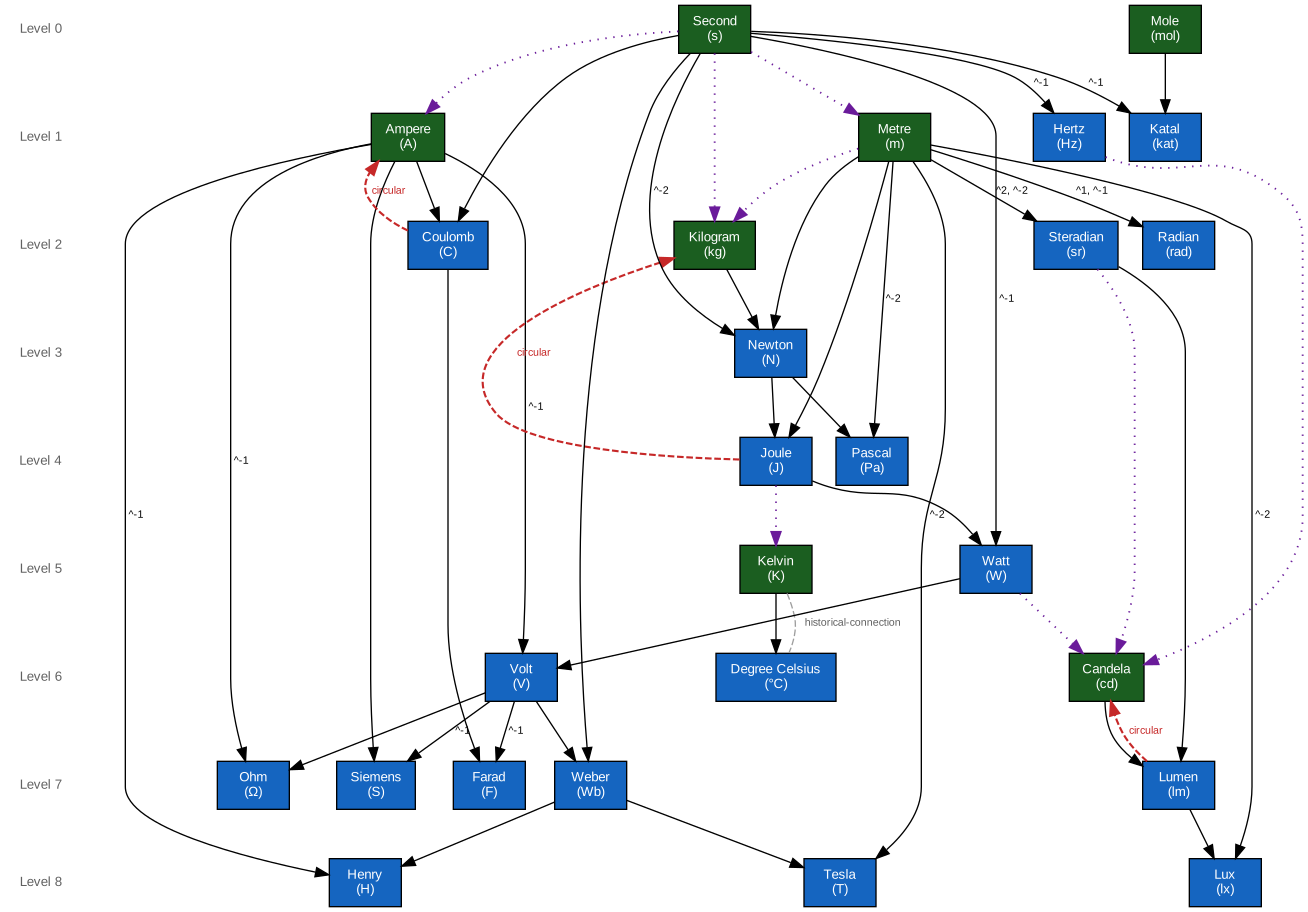
On paper, the world measures with one system. The SI defines seven base units, and since 2019 each one is set by fixing the value of a physical constant. In practice, many other systems are still in use. Imperial and US customary units share names but not sizes. CGS has three incompatible variants. Natural units set chosen constants to 1, and astronomy, radiology, navigation and computing each keep units of their own. Even within SI, some conventions are still argued over, such as whether an angle has a dimension.
This project aims to untangle all of it, one unit at a time. For each unit it records what the unit is built from, every formal definition it has had, and how it relates to other units. The graph is arranged in levels. Level 0 holds the units that depend on nothing else: the second and the mole, whose constants are stated only in terms of themselves. Every other unit sits one level below the deepest unit it depends on. That includes the SI's other "base" units, whose constants are stated in other units. The metre, for example, fixes the speed of light in metres per second, so it sits below the second. Red loops mark circular definitions, where a unit is defined in terms of a unit built from itself. The ampere, for example, is defined in coulombs, and a coulomb is an ampere-second. Click a unit to see its full history.